


KEY TAKEAWAYS
- AI and algorithmic trading now account for ~70% of daily US equity volume — these systems process price signals and execute trades in microseconds, creating efficiency but also new volatility patterns unfamiliar to traditional investors.
- Robo-advisors manage over $1.5 trillion globally and are ideal for passive, low-cost portfolio management — but they cannot adapt dynamically to structural market regime changes the way active human managers can.
- AI sentiment analysis using NLP to scan news and social media is now a standard hedge fund tool — retail investors can access similar capabilities via Perplexity, Claude, and purpose-built tools like AlphaSense at a fraction of the institutional cost.
- AI accelerates the research phase of investing dramatically but doesn’t replace human judgment — the core value is in extracting data from filings, detecting anomalies, and screening — not in predicting price direction.
- The practical AI edge for retail investors: research efficiency (10-K analysis, earnings call summarization, stock screening) rather than algorithmic trading, where institutional firms have overwhelming data and latency advantages.
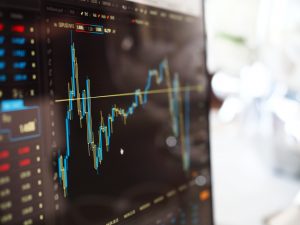 AI is giving investors new tools, insights, and strategies to make investment decisions, and enabling them to gain access to data and information in new ways. AI is also giving traders the ability to automate their strategies and emulate the strategies of successful investors.
Stock Market and Investment Strategies
AI’s impact on the stock market can be seen in the growing use of robo-advisors, which are automated financial advisors that use algorithms to generate portfolio recommendations for investors. These robo-advisors can provide investors with personalized portfolio advice tailored to their individual goals, relying on advanced data analytics and AI to analyze a wide range of inputs.How AI Is Reshaping the Market
Another impact of AI on the stock market is in how it is being used to detect fraudulent activities. By analyzing traders’ activities over time, AI can detect and alert authorities to suspicious patterns of stock trades. This can help protect investors from potential fraud and manipulation of the market. Artificial Intelligence (AI) has had a significant impact on the stock market and investment strategies in recent years. Here are some ways in which AI is influencing the stock market and investment decision-making:- Data analysis and pattern recognition: AI algorithms can analyze vast amounts of financial data, news articles, social media sentiment, and other relevant information faster and more accurately than humans. These algorithms can identify patterns, correlations, and trends that may not be apparent to human analysts. This helps investors make more informed decisions based on data-driven insights.
- Algorithmic trading: AI-powered algorithms can execute trades automatically based on predefined rules and market conditions. These algorithms can process market data, identify trading opportunities, and execute trades at high speeds, leading to more efficient and timely transactions. Algorithmic trading reduces human error and eliminates emotional biases, resulting in improved trading efficiency.
- Quantitative modelling and predictive analytics: AI techniques such as machine learning and deep learning enable the development of sophisticated predictive models. These models can analyze historical market data, identify factors affecting stock prices, and make predictions about future market movements. For a deep dive into how machine learning is applied to portfolio construction, see our guide on reinforcement learning for asset allocation.

- Risk management: AI can assist in risk assessment and management by analyzing vast amounts of historical data and identifying potential risks in investment portfolios. AI algorithms can provide risk scoring, identify potential outliers, and offer insights into diversification strategies. This helps investors in optimizing their portfolios and managing risk more effectively.
- Sentiment analysis: AI algorithms can analyze social media feeds, news articles, and other sources of information to gauge public sentiment and market perception. By monitoring sentiment, investors can gain insights into market sentiment shifts and potential impacts on stock prices. This information can be used to adjust investment strategies accordingly.
- High-frequency trading: AI-powered trading systems can make split-second trading decisions and execute trades at high speeds, leveraging technological advantages. High-frequency trading algorithms can identify short-term market inefficiencies, exploit price discrepancies, and capitalize on small price movements. This has led to increased liquidity and improved market efficiency.
- Robo-advisors: AI-powered robo-advisors offer automated investment advice and portfolio management services to individual investors. These platforms use AI algorithms to analyze investors’ goals, risk tolerance, and market conditions to provide personalized investment recommendations. Robo-advisors have gained popularity due to their cost-effectiveness, accessibility, and ability to provide customized investment solutions.
📈 Key Insight: AI democratizes information access but not alpha generation. The competitive advantage AI gives retail investors is at the research and screening stage — doing in 45 minutes what took a weekend before. The judgment call on whether to act on that research — assessing management quality, sizing the position, determining the macro fit — still requires human context that AI systems consistently get wrong in novel market environments. Use AI to find the signal faster; apply your own judgment to decide what to do with it. See our AI equity research workflow for the exact 4-stage process.
⚠️ Watch Out: The biggest risk with AI-driven investing is overconfidence from backtesting. An AI model that achieved 20% annualized returns on 10 years of historical data may have simply overfit to the specific conditions of that bull market. When market regimes change — rate cycles, geopolitical shocks, valuation resets — historically-tuned models can generate large losses precisely when investors are most confident in them. Use AI to augment your process; never let it replace your risk management discipline.
📊 Portfolio Takeaway
The practical AI investing stack for retail investors in 2026: Perplexity Pro for scanning news and analyst research on new ideas; Claude for deep document analysis (10-Ks, earnings transcripts); ChatGPT with code execution for data modeling and screening. Apply the Market Digests five-pillar framework to structure your research output before making decisions. Focus AI use on research efficiency — the phase where institutional advantages matter least. See the best AI investing tools overview for a full comparison of available options.
Conclusion
Overall, AI is making a huge impact on the stock market and the investment strategies of investors. By providing access to new data and insights, AI is enabling investors to make smarter and more informed decisions, while at the same time reducing their exposure to risk. Investors who develop a disciplined AI research workflow — screening, document analysis, quantitative modeling — will have a meaningful edge over those relying on intuition alone.